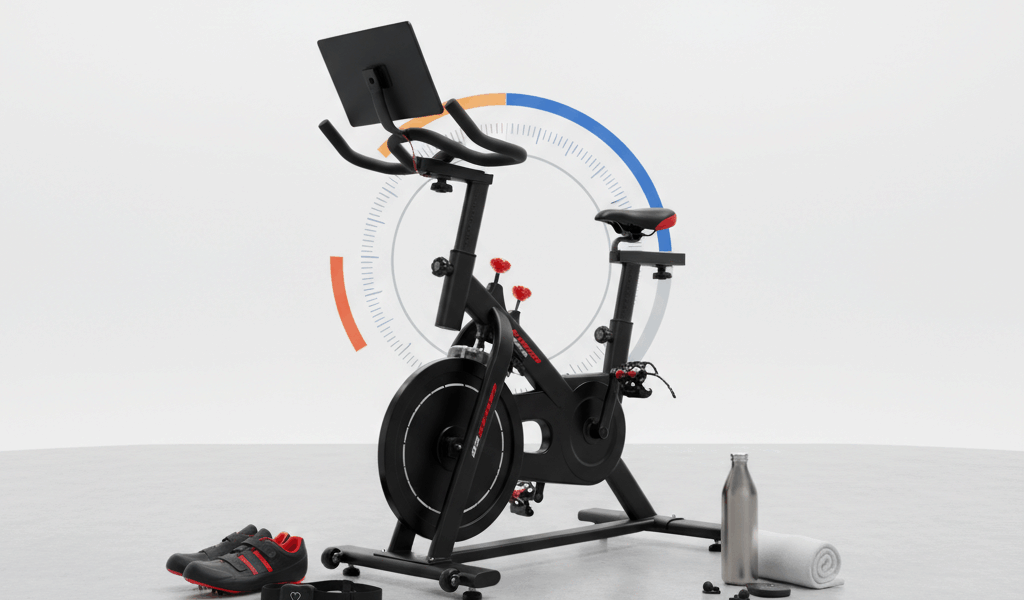
Mastering the Mental Game of High-Intensity Spin Classes
As someone who has pushed through more brutal climb intervals than I can count, I can tell you this: your legs rarely give out first. It’s your head that quits. When your quads are screaming during a tough climb and your lungs feel like they’re on fire through sprint intervals, that voice telling you to stop is almost always lying. I learned everything about mental toughness the hard way – by quitting early dozens of times before I figured out how to push past that voice.

Understanding the Mental Challenge
High-intensity exercise hurts. Your brain evolved to protect you from perceived threats, and serious physical stress triggers warning signals screaming at you to slow down or stop. Learning to interpret and manage these signals separates people who just get through class from those who actually improve.
Here’s what blew my mind: research shows most people quit at around 60-70% of what they’re actually capable of physically. The remaining potential is locked behind mental barriers that can be trained and pushed back just like any physical attribute.
Pre-Class Mental Preparation
Visualization isn’t just woo-woo stuff – elite athletes across every sport use it. Before class, spend 5 minutes picturing yourself crushing the hardest parts of the workout. See yourself holding form during climbs, recovering fast between intervals, and finishing strong. It sounds cheesy until you try it and realize it works.
Set a specific intention for each class. Skip the vague “work hard” goals. Choose something concrete like “I will hold my target cadence through all four sprint intervals” or “I will not touch that resistance knob during the final climb.” Specific targets give your mind something clear to focus on.
Techniques During the Ride
Segment the Workout
A 45-minute class can feel overwhelming when you’re hurting 10 minutes in. Breaking it into smaller chunks makes everything manageable. Focus only on the current interval or song. When that ends, focus on the next one. This keeps your mind from projecting current discomfort into the future and catastrophizing.
Mantras and Self-Talk
Develop short phrases you repeat when things get ugly. “I am strong,” “This is temporary,” or “I’ve done hard things before” redirect thoughts from suffering to empowerment. Research confirms that positive self-talk actually improves endurance performance – it’s not just feel-good nonsense.

Focus on Technique
When pain spikes, shift attention to form. Concentrate on smooth pedal strokes, engaged core, relaxed shoulders, and steady breathing. This occupies your mind with something productive rather than dwelling on how much everything hurts.
Embrace Discomfort
Instead of fighting the burn, accept it as proof that you’re working and growing. Reframe the sensation from “this hurts” to “this is making me stronger.” Changing your relationship with discomfort transforms it from enemy to ally.
Breathing for Mental Control
Your breath directly affects your mental state. When anxiety or panic rises during hard efforts, breathing typically becomes rapid and shallow. Consciously slowing and deepening your breath activates the parasympathetic nervous system and dials down the sense of emergency.
Practice rhythmic breathing synced to your pedal strokes. Inhale for three strokes, exhale for three strokes. This pattern provides a focal point and prevents hyperventilation.
Dealing with the Voice That Says Stop
Everyone has that inner voice suggesting you quit when things get hard. Rather than arguing with it, acknowledge it without obeying. Tell yourself “I notice my mind wants to stop, and I am choosing to continue.” This creates distance between the thought and your action.
Remember: the voice lies. It told you to stop last week, you ignored it, and you survived just fine. Each time you push past it, you build evidence that you’re capable of more than the voice claims.
Post-Class Reflection
After brutal workouts, take a moment to acknowledge what you accomplished. Note specific moments where you wanted to quit but didn’t. This reflection builds a mental library of successful experiences you can draw from in future challenges.
Journal about your mental experiences periodically. Patterns emerge showing which techniques work best for you and which situations need more practice.
Building Long-Term Mental Fitness
Mental toughness develops through consistent exposure to challenging situations. Don’t avoid hard classes – seek them out. Each difficult workout is an opportunity to practice these skills and expand your capacity.
The mental resilience you build in spin class carries over to other areas of life. The discipline to push through discomfort, focus under pressure, and maintain commitment when things get hard serves you way beyond the bike.
Your mind is your most powerful performance tool. Train it with the same dedication you bring to your physical fitness.

Leave a Reply