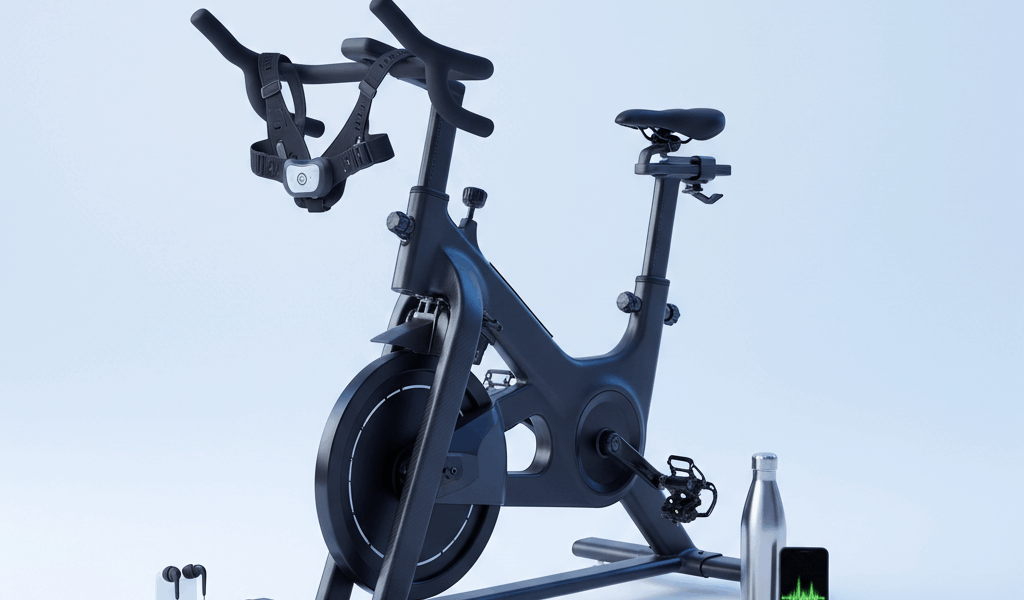
Everything You Need to Know About Spin Bike Resistance and Power
As someone who spent my first few months just turning the resistance knob randomly, I wish someone had explained this stuff sooner. Understanding resistance and power changed spin class from random sweating into actual targeted training. Now I can walk into any class and make it work for exactly what my body needs that day.

How Spin Bike Resistance Works
Most bikes use either friction or magnetic resistance. Friction bikes have a felt pad that presses against the flywheel when you crank that knob. Magnetic bikes use magnets instead – no physical contact means smoother operation and fewer maintenance headaches down the road.
When you add resistance, you’re essentially forcing your muscles to push harder with each pedal stroke. It’s like riding up a hill or pushing through a nasty headwind outdoors. Lower resistance with fast legs emphasizes cardio work. Higher resistance at slower speeds builds muscular strength and raw power.
Finding Your Baseline Resistance
Your baseline should feel heavy enough that you maintain control of the flywheel through every pedal stroke, but light enough to hold 80-100 RPM without straining. I see so many beginners riding way too light – bouncing around in the saddle with zero control. If your hips are rocking side to side or you can’t smoothly stop the pedals, add resistance until you feel connected to the wheel.
From your baseline, you should have room to increase significantly for climbs and decrease slightly for flat road simulations. If you’re already maxed out at baseline, you’ve set it too high.
Understanding Power Output
Power measured in watts tells you objectively how hard you’re actually working. It combines the resistance you’re pushing against and how fast your legs are spinning. Two people could show identical heart rates but produce completely different power numbers based on their fitness levels.
The formula is simple: power equals force times velocity. Increasing either resistance or cadence bumps up your power. Most efficient approach is usually a combination rather than going extreme on either end.
Using Power Zones
If your bike shows watts, you can train using power zones similar to heart rate zones. Functional Threshold Power (FTP) represents the maximum power you can sustain for about an hour. Everything else is a percentage of that number.
Zone 1 (under 55% FTP): Active recovery
Zone 2 (55-75% FTP): Endurance building
Zone 3 (75-90% FTP): Tempo and sweet spot training
Zone 4 (90-105% FTP): Threshold work
Zone 5 (105-120% FTP): VO2max intervals
Zone 6 (over 120% FTP): Anaerobic capacity
Zone 7 (max effort): Neuromuscular power sprints
Want to estimate your FTP? Warm up properly, then ride as hard as you can sustain for 20 minutes. Take 95% of your average power during that test and you’ve got a solid FTP estimate.
Matching Resistance to Instructor Cues
When instructors call out things like “add two turns” or “heavy climb,” translate those cues to your personal fitness level. What feels heavy for someone just starting out is completely different from a seasoned rider. Focus on hitting the intended effort level rather than matching what everyone else in the room appears to be doing.
Rate of perceived exertion (RPE) helps here. On a 1-10 scale, recovery should feel like 3-4, endurance work 5-6, tempo 7, threshold 8, and max efforts 9-10. Match your resistance to those sensations regardless of what the person on the bike next to you has going on.
Progressive Resistance Training
Improvement requires progressively increasing the challenge. Track your power output or resistance levels at specific efforts over time. If your threshold power was 150 watts two months ago and hits 165 watts now, that’s real, quantifiable progress you can point to.
Test yourself periodically with standardized efforts. A 20-minute FTP test every 6-8 weeks gives you benchmark data to adjust training zones and confirm your program is actually working.
Common Resistance Mistakes
Too Light: Spinning with almost no resistance provides minimal training benefit. You burn fewer calories, build less strength, and miss the neuromuscular challenge that actually improves cycling performance.
Too Heavy: Grinding at maxed-out resistance with super low cadence stresses your joints and can lead to knee problems. It also limits cardiovascular development and burns you out fast.
Never Changing: Some folks find a comfortable resistance and never touch the knob again. Varying resistance throughout workouts and across different sessions creates more complete fitness.
The Bottom Line
Resistance and power are the tools that shape your fitness. Learn to use them with intention, track your numbers over time, and you’ll see improvement that random effort could never produce. That bike console isn’t decoration – it’s your training partner and progress tracker.


Leave a Reply