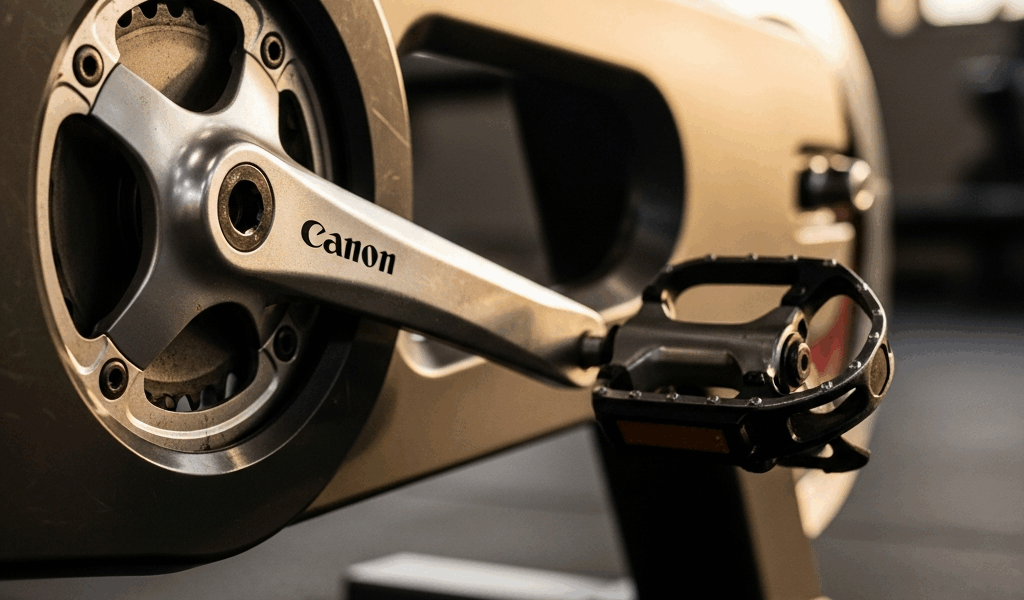
Why Your Spin Bike Is Making a Knocking Noise
Spin bike troubleshooting has gotten complicated with all the conflicting advice flying around. As someone who has torn apart three different bikes trying to chase down mysterious knocking sounds, I learned everything there is to know about this particular misery. Today, I will share it all with you.
That rhythmic knock, knock, knock mid-ride — the one that shows up exactly when your legs are burning and your heart rate is finally where you want it — is maddening. But here’s the thing: you can almost certainly fix it yourself. Under 20 minutes. No technician, no surprise parts order.
The noise almost always comes from one of four places: loose pedals, a loose crank arm, flywheel or belt trouble, or a worn bottom bracket. Pedals and crank arms alone account for roughly 85% of all knocking complaints. Both are dead simple to resolve at home.
So, without further ado, let’s dive in — starting with the most likely culprits first, working toward the more involved fixes at the end.
Check Your Pedals First — It Is Usually This
Loose pedals cause more spin bike knocking than any other single issue. I learned this the hard way after spending 40 minutes checking my crank arm and flywheel before noticing my left pedal was barely hand-tight. Don’t make my mistake.
But what is the left pedal problem, exactly? In essence, it’s reverse-threaded. But it’s much more than that — it’s the single most overlooked detail in spin bike maintenance. Most people either miss it entirely or forget it exists. Tightening your left pedal means turning counterclockwise. Right pedal goes clockwise. Get those backwards and you’ll loosen it every single ride without realizing it.
The diagnostic test is simple. Stop pedaling. Unclip from both pedals. Grip one pedal and try to wiggle it side to side — you should feel almost zero movement. Any noticeable play means that pedal is loose. Repeat on the other side.
If either pedal is loose, grab a 15mm wrench or Allen key depending on your pedal model. Hand-tighten the pedal first by gripping the spindle and turning until snug. Then use the wrench and turn it a quarter-turn more. That’s it. Seriously, stop there. Over-tightening strips the threads on the crank arm, which becomes a much bigger headache than a knocking noise.
While you’re in there, grab the pedal and try rotating it around its axle. Spins freely and smoothly? Bearing is fine. Feels stiff or gritty? The pedal bearing is worn — the whole pedal needs replacing. That’s a separate issue from the knock you hear while riding, but worth knowing about now rather than later.
How to Diagnose a Loose Crank Arm
Pedals are tight but the knock is still there? The crank arm is next on the list. It’s the lever connecting your pedal to the flywheel spindle — and when the bolt holding it loosens, you get a knock that syncs almost perfectly with your pedal stroke.
The test is direct. Sit on the bike, unclip from the pedals, grip one pedal and push it laterally. Side to side, not up and down. Rock-solid resistance means you’re fine. Any movement beyond about a millimeter means the crank arm bolt has loosened up.
To fix it, you’ll need a socket wrench sized to your crank bolt. Most spin bikes use 14mm — my Sunny Health SF-B1002 uses exactly that — but check your manual before assuming. Fit the socket over the bolt and turn clockwise firmly. You don’t need to muscle it, but make it genuinely snug.
Here’s a detail that actually matters. After tightening, ride for about five minutes at moderate effort. Then stop and re-check the bolt. Crank bolts often need a second pass after initial riding because the joint settles into position. Normal behavior. Don’t skip this step or you’ll be back here in a week wondering why the knock returned.
Some spin bikes use a self-extracting bolt system — a separate washer or locking collar that prevents loosening over time. If you spot an unusually wide washer under the crank bolt, that’s the system at work. Tighten it the same way, but know you’ve got a built-in safety feature doing some of the work for you.
Flywheel and Belt Issues That Cause Knocking
Probably should have opened with this section, honestly. Flywheel problems are real — just less common than the pedal and crank stuff above.
A loose flywheel produces a different kind of knock. Deeper. More resonant. It doesn’t always sync cleanly with your pedal stroke, which is how you know it’s not a crank issue. Sounds more like something shifting inside the bike rather than a mechanical click tied to your movement.
Diagnosing it requires removing the side cover panel. Most covers on common bikes — the Keiser M3i, Schwinn IC4, that kind of thing — slide off or unbolt with two or three screws. Once exposed, spin the flywheel by hand and watch it carefully. A loose flywheel wobbles side to side as it spins. A properly secured one runs true with no lateral drift.
Wobble confirmed? The bolts holding the flywheel to the spindle have loosened. Grab a socket wrench — typically 10mm or 12mm — and tighten each bolt firmly. Spin the flywheel again afterward to confirm it now runs true.
While the cover is off, check your drive belt too. Look for visible cracks, fraying, or a shiny glazed surface — all signs of wear. A deteriorating belt can slip or vibrate and produce a knocking sound that mimics mechanical failure. Replacement belts run $20 to $60 depending on your model and are genuinely DIY-friendly. Search your specific bike model on YouTube and you’ll have it done in 15 minutes.
Chain-drive bikes need tension checks instead. A chain that’s too loose rattles and knocks. Too tight and it starts wearing the bearings prematurely. Most chains should deflect roughly half an inch at the midpoint between sprockets when you push on them — but confirm that spec in your manual because it varies.
When the Bottom Bracket Is the Problem
The bottom bracket is the bearing assembly where the crank arms spin — at the pedal junction inside the frame. It’s a wear item. It deteriorates with use, especially in humid environments or bikes stored in garages.
A worn bottom bracket sounds more like a creak or click than a traditional knock. That’s an important distinction. The sound happens during pedal strokes, particularly under load, and it doesn’t disappear when you apply harder pressure to the pedal. That distinguishes it from a loose pedal or crank, where pressing harder can sometimes temporarily mask the noise.
Before assuming you need a replacement, try cleaning and re-greasing first. I’m apparently obsessive about maintenance and a $12 tube of Finish Line Teflon grease works for me while expensive specialty products never seemed to make a difference. Some spin bikes have grease fittings on the bottom bracket where you can inject fresh grease directly using a grease gun. Fresh grease occasionally stops the noise permanently — and even when it doesn’t, it buys you time to decide on next steps.
If re-greasing doesn’t solve it, the bottom bracket has internal wear and needs replacement. Here’s the honest part: parts and tools run $40 to $150, plus labor if you hire someone. On a budget bike that originally cost $300, that math gets uncomfortable fast. On a $1,000+ bike — a Peloton, a Stages, anything in that range — it’s worth doing immediately without overthinking it.
Bottom bracket replacement requires a specific removal tool, a new bearing cartridge, and about an hour of your time. Search your exact bike model on YouTube before ordering anything — many modern spin bikes are genuinely straightforward, though some older budget models use pressed bearings that require shop equipment you won’t have at home.

Leave a Reply