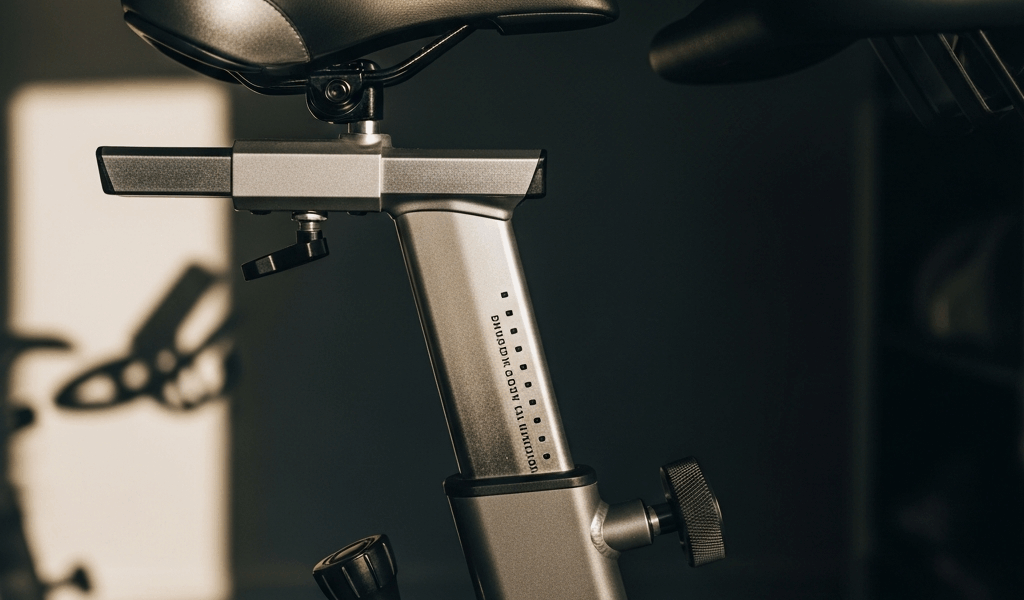
Why Handlebar Height Actually Matters
I spent six months riding a Peloton bike before realizing my handlebars were bottoming out like I was trying to kiss the front wheel. The result? Constant neck strain, shoulders so tight I couldn’t turn my head without pain, and a lower back that rounded forward until my spine looked like a question mark. Probably should have opened with this section, honestly.
Most spin bike setup guides obsess over seat height. They show you the 25-35 degree knee bend rule, the hip-over-pedal alignment, all of it. Handlebars? Almost never mentioned. That omission does real damage — the kind that compounds quietly over weeks until you’re dreading workouts instead of enjoying them. Wrong handlebar height forces your neck into hyperextension, loads your upper traps and rhomboids, and kills your core engagement because you’re bracing everything just to stay stable. Power output drops too. I noticed it immediately once I fixed mine. Same effort, easier output, watts actually climbing — and I could finish a 45-minute class without counting down the seconds until my shoulders stopped burning.
How to Find Your Correct Handlebar Height
Here’s the step-by-step method I use and recommend to anyone setting up their bike for the first time. So, without further ado, let’s dive in.
- Start with the baseline position. For most riders — especially beginners — handlebars should sit level with your seat or 1-2 inches higher. Not a final answer, but a safe starting point. On a Peloton, Schwinn IC4, or similar models, that usually means setting the metal post to the middle or slightly upper-middle position. Start there. Adjust later.
- Use your hip height as a reference. Stand next to your bike in cycling shoes — or whatever shoes you actually ride in, no judgment. Your hip bone should align roughly with the seat height. Your elbow should land at roughly that same hip height when you’re standing over the pedals. It’s a visual anchor that doesn’t require a tape measure or a protractor.
- Check the elbow-to-fingertip distance. Sit on the bike in your actual riding position — hands on the bars, feet clipped in. Your elbows should have a soft bend. About 25-30 degrees. Not locked out. Not folded like you’re doing a push-up. Just a little give. Arms completely straight? Bars are too low. Elbows folding sharply? Too high. Simple.
- Fine-tune for your torso length. Longer torsos can handle lower bars. Shorter torsos need higher bars to avoid excessive spinal flexion. I’m apparently 5’11” with a longer-than-average torso, and riding bars slightly below seat height works for me — while my partner at 5’4″ needs hers about 2 inches above her seat and anything lower never feels right for her. Don’t make my mistake of copying someone else’s exact setup.
- Test your flexibility honestly. New to cycling? Tight hips or hamstrings? Start higher. You can always drop the bars in a few weeks as things loosen up. Aggressive positioning before your body is ready creates injury, not fitness — and I learned this the hard way after diving straight into drop-bar territory after years off the bike. Don’t rush it.
- Ride it for 3-5 classes before adjusting again. Your body needs time. Neck soreness or shoulder tightness on day one might completely disappear by day three as your stabilizer muscles wake up. If pain is still hanging around after five rides, then adjust. Not before.
Reach and Fore-Aft Position Matter Too
Handlebar height is only half the puzzle. Most spin bikes let you slide the handlebar stem forward or backward — that reach distance matters more than people realize.
Too close to the seat and you’re sitting too upright, losing power transfer through your quads. Too far and you’re stretched out like you’re on a road bike doing a century ride, which loads your shoulders and lower back hard during any real effort. The sweet spot lands around 6-8 inches from your seat. Close enough that your shoulders stack over your hips with a slight forward lean. Far enough that you’re not cramped into a hunched position.
Use the soft-elbow test here too. Grip the bars, elbows bent about 25-30 degrees. Hands should feel supported. Shoulders should stay down, not creeping up toward your ears. If they’re hunched, bars are too far. If you’re collapsing into a C-curve just to reach them, too close. On my Schwinn IC4, I kept the stem at the middle position — that works for my build. Your “correct” position might sit completely differently, and that’s fine.
Signs Your Handlebars Are Still Wrong
Even with a careful setup, sometimes your body tells you something’s still off. Here’s what to listen for.
- Tight upper trapezius and neck stiffness — Handlebars too low. Your neck is overextending backward just to see the screen in front of you.
- Shoulder blade pain or fatigue — Usually a combination of too-low bars and too-far reach. Your rhomboids are grinding away trying to stabilize everything.
- Lower back rounding or soreness — Excessive forward lean. Either the bars are too low and too far out, or your mobility just isn’t ready for that position yet.
- Wrist or hand numbness — Bars too high or too close, forcing your wrists into a hyperextended position just to grip properly.
- Arms and shoulders fatiguing before your legs do — You’re bracing instead of engaging your core. The bars are probably pushing you into an unstable position you’re compensating for without realizing it.
- Sharp pain in the front of the shoulder — Bars too low and too far forward, creating impingement right at the shoulder joint. Back off immediately. That’s not soreness — that’s a warning.
Quick Setup Checklist Before Every Ride
Run through this before you clip in. Ninety seconds. Prevents a lot of suffering down the road.
- Seat height — hip over pedal, 25-35 degree knee bend at the bottom of the stroke.
- Handlebar height — level with seat or 1-2 inches higher, elbows holding that 25-30 degree bend.
- Handlebar reach — 6-8 inches from seat, shoulders stacked over hips without straining.
- Foot strap tension — snug, not painful, no numbness after the first 5 minutes of riding.
- Resistance starting point — usually 3-5 on the dial, depending on your specific bike model.
- Posture check — shoulders back and down, core engaged, spine neutral, nothing rounding forward.
Get those six things dialed in and 80% of spin bike pain disappears. The remaining 20% almost always comes from pushing too hard, too soon. Be patient with your setup. Your body will figure it out — but only if you give it a real chance to adapt.


Leave a Reply